Body Shape by Height: How to Dress Petite to Tall
Height and body shape are independent. A 5'0" woman and a 5'10" woman can share the same pear shape, but they need different hem lengths, different volumes, and different scales. This guide covers all five body shapes across three height categories, with specific measurements and outfit formulas for each combination.
Most styling guides tell you to dress for your body shape. Some tell you to dress for your height. Almost none do both at once. That is a problem, because a petite pear and a tall pear need completely different advice, even though they share the same proportional shape. The skirt that looks great on a 5'8" pear might drown a 5'2" pear.
This guide combines body shape with height to give you styling advice that actually works for your specific combination. No generic tips. Specific measurements, outfit formulas, and garment recommendations based on both your proportions and your frame.
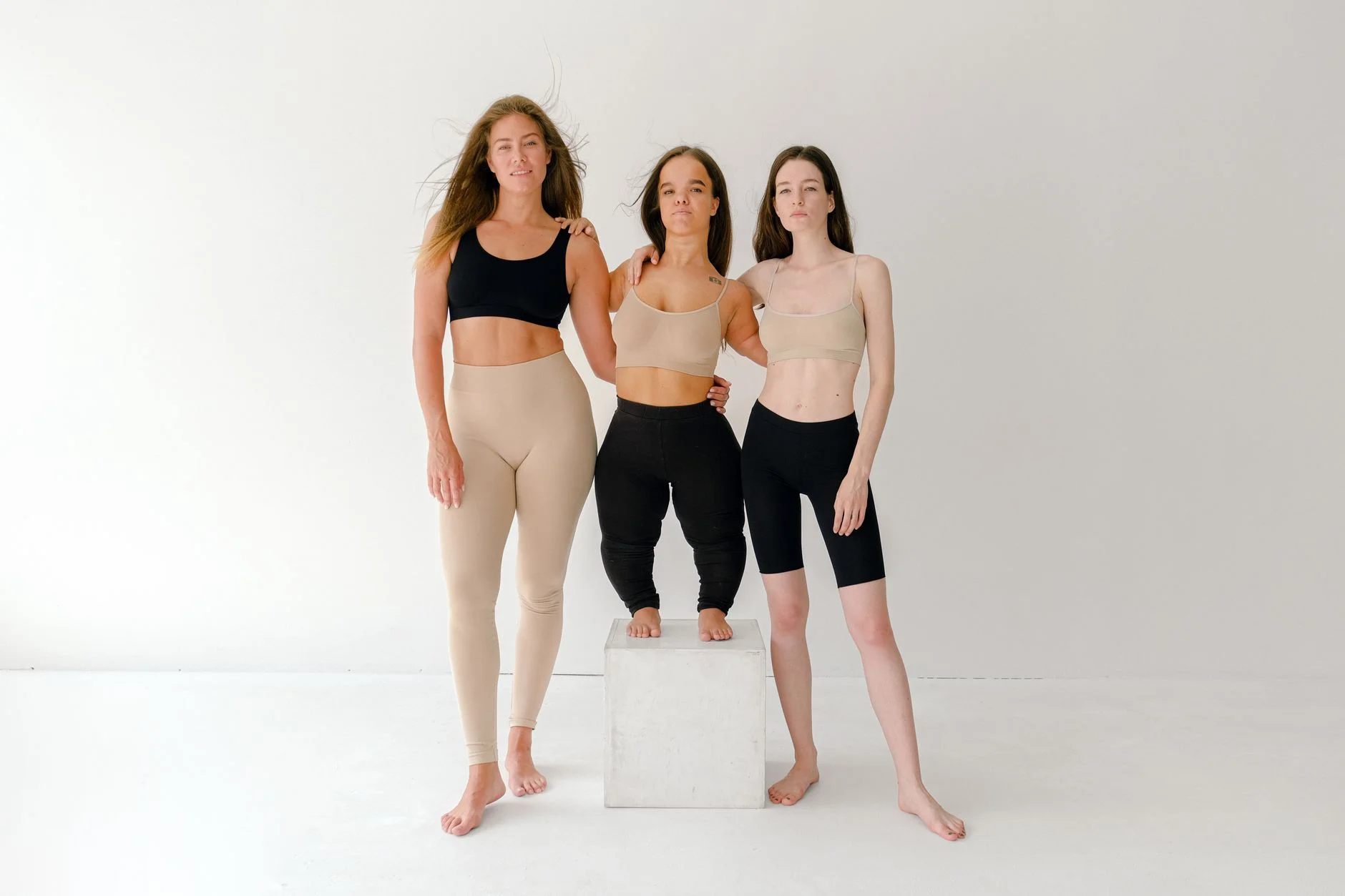
Body shape and height: two separate things
Your body shape is about proportions: the relationship between your bust, waist, and hips. Your height is about scale: how much vertical space you have to work with. They are completely independent. A woman who is 5'1" can have the exact same bust-waist-hip ratios as a woman who is 5'9".
Research on body proportions has found five common shapes among women: rectangle (roughly 46%), pear (about 20%), apple (about 14%), hourglass (about 8%), and inverted triangle (the remaining percentage). These distributions hold across height groups. Being petite does not make you more likely to be a particular shape.
Body shape tells you what silhouettes to pick
- Determined by bust, waist, and hip measurements
- Five categories: apple, pear, hourglass, rectangle, inverted triangle
- Affects necklines, waistlines, and garment cuts
- Does not change with height
Height tells you what scale and lengths to pick
- Measured in feet/inches or centimeters
- Three categories: petite, average, tall
- Affects hemlines, rise heights, jacket lengths, print scale
- Changes how much volume you can carry
When you combine both, you get specific advice. Not just "wear an A-line skirt" but "wear an A-line skirt that hits 2-3 inches above the knee with a 10-inch rise." That level of detail is what makes the difference between clothes that fit and clothes that actually look right.
How body shape and height work together
Think of it as two layers of information. Your body shape is the foundation: it tells you which cuts, necklines, and silhouettes complement your proportions. Your height is the calibration layer: it adjusts the lengths, volumes, and scale of those choices.
Start with body shape
If you are pear-shaped, you need structure at the shoulders and flow at the hips. If you are apple-shaped, V-necks and empire waists balance your midsection. This is true regardless of height. Not sure of your shape? Our free Body Shape Calculator figures it out from three measurements in about 30 seconds.
Then adjust for height
A pear-shaped woman at 5'2" needs above-knee hemlines to show leg, while a pear-shaped woman at 5'9" can carry a maxi skirt. Same body shape, different height, different garment details.
Fine-tune with measurements
Knowing the exact rise height, inseam, and jacket length for your frame turns generic advice into something you can actually shop for.
Measurement reference by height
These numbers are not rigid rules. Bodies vary, and personal preference matters. But if you have ever stood in a fitting room wondering whether a skirt is the right length or jeans sit at the right height, these ranges give you a starting point.
| Measurement | Petite (under 5'4") | Average (5'4"-5'7") | Tall (over 5'7") |
|---|---|---|---|
| Above-knee skirt | 17-19" inseam | 20-22" inseam | 22-24" inseam |
| Midi skirt | 25-27" | 29-31" | 31-34" |
| Maxi skirt | 36-38" | 38-40" | 40-44" |
| High-rise jeans | 10-11" rise | 10.5-12" rise | 11.5-13" rise |
| Jeans inseam | 26-28" | 28-30" | 32-36" |
| Blazer length | Cropped to hip bone | Standard hip-length | Hip to mid-thigh |
Styling for petite women (Under 5'4" / 163 cm)
If you are under 5'4", proportions matter more than almost anything else. Every inch of fabric counts because you have less vertical space to work with. The goal is not to look taller. The goal is to look intentional, balanced, and put-together.
General tips for petite frames
- •Vertical lines elongate your frame. Think seams, buttons running down the center, or a long necklace that draws the eye lengthwise.
- •High-waisted bottoms with a 10-11 inch rise create the look of longer legs. Standard rises (8-9 inches) can cut your torso short.
- •One color from head to toe, or close to it, removes visual breaks that chop your frame into sections.
- •Tailoring is non-negotiable. Off-the-rack clothes are cut for 5'4" to 5'7". If sleeves pool at your wrists and hems drag on the floor, no styling trick will fix that.
- •Pointed-toe shoes add a few visual inches. Nude-toned shoes blend with your skin and extend the leg line even further.
- •Keep bags proportional to your frame. An oversized tote can look like luggage on a petite person.
Body shape advice for petite women
Quick measurements for petite frames
Styling for average women (5'4" to 5'7" / 163-170 cm)
If you are between 5'4" and 5'7", standard sizing was designed for your frame. Most off-the-rack clothing will fit reasonably well without major alterations. Your main focus should be on body shape, not on height compensation. That said, small adjustments can still make a big difference.
General tips for average frames
- •You have the most freedom with hemlines. Midi, above-knee, below-knee, maxi (if you are closer to 5'7") all work.
- •Standard sizing in most brands fits your proportions well. Focus on finding the right cut for your body shape rather than hunting for special lengths.
- •You can experiment with volume. A billowy top with slim pants, or slim top with wide-leg trousers. You have room to play with both.
- •Proportional accessories work best. You can carry medium-sized bags, statement jewelry, and standard-width belts without looking overwhelmed or underwhelmed.
- •Layering works naturally on your frame. Blazers, cardigans, and vests add visual interest without throwing off proportions.
- •If you are closer to 5'4", lean toward petite-friendly tips. Closer to 5'7", you can borrow from tall-friendly tips.
Body shape advice for average women
Quick measurements for average frames
Styling for tall women (Over 5'7" / 170 cm)
If you are over 5'7", you have a longer canvas to work with. Maxi lengths, bold prints, voluminous shapes, and dramatic silhouettes that can overwhelm a shorter frame will look proportional on yours. Your challenge is usually finding clothes long enough, not creating the look of length.
General tips for tall frames
- •Maxi dresses and floor-length skirts look elegant on tall frames. You have the height to carry them without looking shortened.
- •Horizontal stripes, wide prints, and bold patterns add dimension. Forget the old advice about avoiding them. On a tall frame, they fill the visual space.
- •You can layer with volume: oversized blazers, chunky knits, long coats. What would swallow a petite frame looks intentional on yours.
- •Look for tall or long sizing. Standard inseams (30 inches) often run short. Tall inseams (34-36 inches) give the right break at the ankle.
- •Statement accessories look proportional on you. Oversized sunglasses, wide belts, large bags. They match your scale.
- •Cropped pants work differently on tall frames. A 26-inch inseam that reads "cropped" on average height may just look like the wrong length on you. Try 28-inch crops instead.
Body shape advice for tall women
Quick measurements for tall frames
Outfit formulas for common height + body shape combinations
These are the combinations we see most often, with specific outfit formulas you can use as a starting point. Each formula is a tested combination, not a guess. Adjust the details based on what feels right on your body.
Petite pear
Common combinationYour hips are wider than your bust, and you are under 5'4". The challenge: showing enough leg to create a longer line while balancing your hip-to-shoulder ratio.
Outfit formula:
Structured blazer (cropped, hitting at natural waist) + A-line skirt (2-3 inches above knee) + pointed-toe heels in a nude tone. The blazer adds shoulder width, the skirt skims your hips, and the nude heel extends your leg.
What to skip: Ankle-length skirts, oversized boyfriend jeans, and bulky layers below the waist. These shorten your frame and add visual weight to your widest area.
Tall rectangle
Common combinationYour bust, waist, and hips are similar measurements, and you are over 5'7". You have a long, lean silhouette that can look athletic or boxy depending on what you wear.
Outfit formula:
Belted midi dress in a wrap style + heeled boots + layered necklaces. The belt creates the illusion of a defined waist, the midi length looks proportional to your height, and the necklaces add visual texture to a straight torso.
What to skip: Shapeless shift dresses without a belt. On a tall rectangle, these look like a tent. Add waist definition with a belt, seaming, or a cinched waist.
Petite apple
Needs specific approachYou carry weight through the midsection, and you are under 5'4". The goal is to lengthen your torso visually while creating a smooth line through the middle.
Outfit formula:
Empire-waist top (seam sits just below the bust) + dark straight-leg jeans (high-rise, 10 inch) + V-neck that dips at least 3 inches below the collarbone. The empire seam defines a waistline above your widest area, the dark jeans create an unbroken lower line, and the V adds length through the torso.
What to skip: Cropped tops, wide belts at the natural waist, and anything that clings to the midsection. These draw attention to the widest part of your body on an already compact frame.
Tall hourglass
High-impact stylingYou have balanced bust and hips with a defined waist, and you are over 5'7". This combination can carry dramatic, fitted styles that would overwhelm other frames.
Outfit formula:
Fitted maxi wrap dress in a bold print + wide belt at natural waist + statement earrings. The wrap follows your natural curves, the maxi length uses your full height, and the belt emphasizes the narrowest point. Bold prints look proportional at your scale.
What to skip: Oversized, boxy clothing that buries your shape. You already have curves and height. Showing them is not about being revealing, it is about letting the clothes follow your actual proportions.
Average pear
Versatile stylingYour hips are wider than your bust, and you are between 5'4" and 5'7". Standard sizing works well, so your focus is entirely on balancing proportions.
Outfit formula:
Boat-neck top in a bright color + dark A-line skirt at knee length + ankle boots. The wide neckline adds shoulder width, the bright color draws the eye up, and the dark skirt creates a smooth lower half. Standard hem lengths work fine at your height.
What to skip: Skinny jeans with a loose, cropped top. This combination emphasizes the hip-to-waist contrast without balancing it. If you wear skinny bottoms, pair with a structured top that adds width at the shoulders.
Seasonal styling by height
Your body shape stays the same across seasons. Your height stays the same. What changes is the weight and coverage of the fabrics you wear. Here is how to adapt the height principles to each season.
| Season | Petite | Average | Tall |
|---|---|---|---|
| Spring | Light trench coat (ending at mid-thigh, not knee). Fitted tees under structured jackets. Ankle boots with a 2-inch heel. | Midi skirts with light knits. Trench coats at standard length. Most spring trends work without adjustment. | Maxi floral dresses. Long, light dusters over fitted basics. Wide-leg linen pants at full length. |
| Summer | Above-knee hemlines show leg and create height. Nude-tone sandals extend the line. Avoid wide-brim hats that can dwarf a petite face. | Mix lengths freely. Midi and mini both work. Experiment with both fitted and relaxed silhouettes. | Maxi dresses, wide-leg culottes, oversized linen shirts. Bold prints at full scale. Statement sandals. |
| Fall | Fitted leather jacket (cropped to waist). Slim boots under straight-leg jeans. Monochromatic layering in earth tones. | Blazers, ankle boots, layered scarves. Standard fall wardrobe pieces work well at your proportions. | Knee-length or longer coats. Tall boots with wide-leg pants. Oversized chunky scarves as statement pieces. |
| Winter | Vertical-seam coats, not double-breasted. Slim turtlenecks under structured jackets. Avoid chunky knitwear that adds width. | Standard layering: turtleneck + blazer + coat. Mix textures. Play with proportions within each layer. | Oversized coats, chunky cable knits, floor-length scarves. Heavy layers look balanced on a tall frame. Maxi wool skirts with tall boots. |
Common mistakes by height
These are patterns we see repeatedly. They are not fashion crimes, but avoiding them will make a noticeable difference in how your outfits come together.
Petite mistakes
- Wearing standard-length pants without hemming. Fabric pooling at the ankle shortens your legs visually.
- Oversized bags that are wider than your torso. They throw off your proportions.
- Floor-length maxi dresses without heels or tailoring. If the hem drags, it looks unintentional.
Average-height mistakes
- Ignoring body shape entirely because "standard sizing fits." Fit is not the same as working with your proportions.
- Defaulting to safe, middle-of-the-road choices. You have the most freedom, so use it.
Tall mistakes
- Buying standard-length pants that become accidental crops. Look for tall or long inseams (34-36").
- Avoiding heels because you are "already tall." Wear whatever shoes you want. Your height is not a problem to fix.
- Choosing small, dainty accessories. They look out of scale. Match your accessories to your frame.
What works at every height
- 1.
Tailoring changes everything
A $30 dress that fits your body well will look better than a $300 dress that does not. Hemming pants, taking in a waist, or shortening sleeves costs $10-30 per alteration and transforms how clothes look on you.
- 2.
Know your body shape first
Height adjustments are the second layer. If you do not know whether you are pear, apple, hourglass, rectangle, or inverted triangle, the height tips here will only get you halfway. Take the free Body Shape Calculator to find your shape.
- 3.
Guidelines, not rules
If something looks good on you and you feel good wearing it, that trumps any guideline in this article. Fashion advice is a tool, not a law. Use it when it helps, ignore it when it doesn't.
- 4.
Fabric matters as much as cut
A stiff cotton and a drapey jersey in the same cut will look completely different on the same body. Petite frames generally do better with lighter, less bulky fabrics. Tall frames can carry heavier, more structured materials.
Find your body shape
All the height-specific tips in this guide work best when you know your body shape. Our free calculator takes your bust, waist, and hip measurements, determines your shape, and gives you personalized style recommendations.
It takes about 30 seconds. No sign-up required.
Related guides
Frequently asked questions
Does height affect body shape?
No. Height and body shape are independent. Your shape comes from bust-waist-hip proportions, not your height. A 5'0" woman and a 5'10" woman can both be pear-shaped. What height changes is how you style that shape: which hem lengths, volumes, and scales work best on your frame.
What is the most common body shape for petite women?
Rectangle is the most common shape at every height, making up roughly 46% of women according to body proportion research. Petite women are just as likely to be hourglass, pear, apple, or inverted triangle as taller women. The shape depends on proportions, not on how tall you are.
How should petite women dress for their body shape?
Start with your body shape guidelines (A-lines for pears, V-necks for apples, fitted styles for hourglass). Then adapt for height: keep hemlines above the knee or at midi length, choose high-waisted bottoms with a 10-11 inch rise, stick to one color family from head to toe, and avoid oversized prints.
Can tall women wear horizontal stripes?
Yes. Horizontal stripes add visual width, which can actually balance a tall, narrow frame. If you are 5'8" or taller with a rectangle shape, horizontal stripes give your silhouette more dimension. The old advice to avoid them was never based on real styling principles.
What is the best skirt length for petite pear shapes?
Above the knee, roughly 2-3 inches above the kneecap. An A-line skirt at this length shows enough leg to create a longer line, while the A-line silhouette balances wider hips. Pair with a structured top that has some shoulder detail to draw attention upward.
Do tall women have different body shapes than short women?
No. Body shape distribution is similar across all heights. Tall women can be hourglass, pear, apple, rectangle, or inverted triangle. The difference is in styling: tall frames carry maxi lengths, bold prints, and more volume well, while petite frames look best with streamlined, elongating pieces.
How do I find my body shape if I am petite?
Measure your bust, waist, and hips with a flexible tape. Compare the numbers: if your hips are wider than bust with a defined waist, you are pear-shaped. If bust and hips are similar with a smaller waist, you are hourglass. Our free Body Shape Calculator does the math for you in 30 seconds.
What rise height should petite women look for in jeans?
Petite women should look for a high-rise of 10-11 inches. Standard high-rise jeans (11-12 inches) may sit too high on a shorter torso. Mid-rise at 8-9 inches can work, but high-waisted styles generally lengthen the leg line more, which matters when you have less vertical space to work with.
Should short women avoid maxi dresses?
Not necessarily. A maxi dress that fits well in the bodice and sits at the right length (just above the floor, not puddling) can look great on petite women. The key is a defined waist and a hem that does not drag. Many petite women find that getting a maxi dress tailored makes all the difference.
How does season affect height and body shape styling?
The principles stay the same across seasons. In summer, petite women can show more leg with shorter hemlines. In winter, tall women handle heavy layers better. The main rule: petite frames should layer vertically (long cardigan over fitted top) while tall frames can add horizontal volume (chunky knits, oversized coats).