Rectangle Body Shape: Complete Style Guide
Your calculator says rectangle, and you are in good company. About 46% of women share this shape, where bust, waist, and hips sit close in measurement without much waist dip. The upside? Your proportions work as a blank canvas. A peplum top or a belted coat can shift the whole silhouette in seconds. Below, you will find what actually works and what does not, with real clothing picks and specific measurements to back it up.
Not sure if you're a rectangle shape? Take our free quizWhat Is a Rectangle Body Shape?
A rectangle body shape means your bust, waist, and hips all measure within 2 to 3 inches of each other, and the waist is less than 9 inches smaller than bust or hips. The result is a straight, column-like frame. The NC State University SizeUSA study measured 6,318 women and found 46% had this shape, which makes it the most common female body type. Other names include straight, athletic, and banana shape.
Rectangle Body Shape Measurements
Knowing your measurements is the quickest way to confirm whether you have a rectangle body shape. Here is what to look for:
Proportion Guidelines
- Bust to Hip: Bust and hips are within 2-3 inches of each other
- Waist: Waist is less than 9 inches smaller than bust/hips
- Shoulders: Shoulders align closely with hips
Quick check: Divide your waist measurement by your bust measurement. If the result is 0.75 or higher, you likely have a rectangle shape.
Typical Measurements
Common examples: 36-32-37, 34-30-35, or 38-34-39 inches
How to Measure
Measure bust at fullest point, waist at narrowest point, and hips at widest point. If all three measurements are within a few inches and waist is not dramatically smaller, you likely have a rectangle shape.
Rectangle Body Shape Characteristics
Key Features
- Bust, waist, and hips are similar in width (within 2-3 inches)
- Less defined waistline (waist less than 9 inches smaller than bust/hips)
- Athletic or straight, column-like appearance
- Evenly distributed weight throughout the body
- Often have a longer torso and lean build
- Shoulders and hips align evenly
- Can be any size from petite to plus-size
Rectangle Body Shape Celebrities
These women share a rectangle body shape and have each found their own way to style it:
- Cameron Diaz — Often photographed in belted blazers and high-waisted pants that break up her straight silhouette. She gravitates toward wrap dresses for red carpet events.
- Kate Middleton — Relies on structured coats with defined waistlines and A-line skirts. Her signature look pairs a cinched blazer with a flared midi skirt.
- Gwyneth Paltrow — Known for minimal, clean lines with strategic waist definition. She frequently wears monochromatic outfits with a belt or tuck to add shape.
- Nicole Kidman — Uses asymmetric necklines and ruched gowns on the red carpet, which add curves to her tall, straight frame.
- Natalie Portman — Favors peplum tops and fit-and-flare dresses that add visual volume at the hip without overwhelming her petite rectangle build.
- Keira Knightley — A longtime rectangle-shape style icon who uses structured bodices and full skirts to create waist definition on the red carpet.
How to Dress a Rectangle Body Shape
The goal is simple: add visual shape. Belts, structured cuts, and layered textures all work in your favor. Here are eight ways to get started.
Peplum tops are the simplest trick for rectangle shapes. The flare below the waist suggests a hip curve that your measurements alone do not show. Even a subtle peplum shifts the whole silhouette.
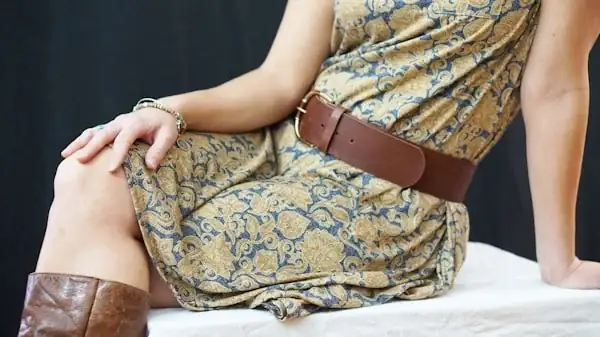
Put a belt at the narrowest part of your torso. That one move does more than almost anything else. It breaks the straight vertical line and gives the eye a waist to land on.
Layer different lengths. A cropped jacket over a longer top, or a hip-length cardigan over a fitted tee. The contrast between lengths interrupts the column effect.
Diagonal lines and asymmetric hemlines pull the eye across rather than straight down. A wrap neckline or an angled hem suggests curves where a straight line would not.
Bold prints and colour blocking around the hips and bust add volume exactly where you want it. Keep the midsection in a solid, darker shade if you want more waist definition.
High-waisted bottoms with your top tucked in at the front mark the waist before you even add a belt. Wide-leg trousers and A-line skirts that flare from the hip work especially well here.
Add structure at the shoulders and volume at the hips. The contrast between those two points makes the waist between them look more defined by comparison.
Bodycon dresses work well on rectangle frames because your balanced proportions mean the fabric clings evenly. Side ruching adds texture that breaks up the straight line.
Best Necklines for Rectangle Body Shape
Necklines affect how your upper body reads. The right one can soften a straight frame and add curves where there are few.
Necklines That Work
- V-neck
Draws the eye inward and lengthens the torso, creating the suggestion of a narrower waist
- Sweetheart
The curved line across the bust adds softness and femininity to a straight frame
- Scoop neck
The rounded shape contrasts with angular proportions and adds visual curves
- Off-shoulder
Shows off the collarbone and shoulders while breaking up the straight line from shoulder to hip
- Asymmetric / one-shoulder
Diagonal lines naturally create the impression of curves where a straight neckline would not
Necklines to Skip
- Square or Sabrina
Mirrors the straight lines of a rectangle frame, which can make the silhouette look boxy
- High crew neck
Without any visual break, a crew neck can make the torso look longer and straighter
Best Clothes for Rectangle Body Shape
These are the specific garment types that work best on a straight silhouette, organized by category.
Rectangle Body Shape Tops
- Peplum tops
- Ruched blouses
- Crop tops
- Off-shoulder styles
- Wrap tops
- Structured blazers
- Ruffled blouses
Best Bottoms
- High-waisted pants
- Flared jeans
- Pleated skirts
- Paper bag waist pants
- Layered skirts
- Wide-leg trousers
- Tiered skirts
Rectangle Body Shape Dresses
- Belted dresses
- Peplum dresses
- Bodycon dresses
- Ruched dresses
- Wrap dresses
- Fit-and-flare dresses
- Structured sheath dresses
Best Outerwear
- Belted coats
- Cropped jackets
- Peplum jackets
- Cinched waist styles
- Structured blazers
- Trench coats
- Fitted leather jackets
Best Fabrics and Patterns for Rectangle Shapes
Fabric choice matters more than most people realize. The right material can add curves and movement to a straight frame.
Fabrics That Add Dimension
- Tweed and boucle: the surface texture adds visual weight and dimension, making the body look fuller and more varied in contour than a flat fabric would.
- Soft knits with stretch: drapes and gathers well, so ruching details and peplum shaping hold their form against the body rather than collapsing flat.
- Cotton with stretch (ponte or jersey blend): firm enough to hold the shape of a peplum or fitted waistband, but flexible enough to move without pulling.
- Silk and silk-like satin: the natural drape creates fluid lines that follow the body, which can soften the straight silhouette without adding bulk.
- Lace and embroidered fabrics: the surface detail creates visual texture across the body, which breaks up the uniform straight line in a way plain fabric cannot.
Fabrics to Avoid
- Stiff canvas and structured suiting without a fitted waist: holds a boxy rectangular shape all on its own, which echoes the body shape rather than adding contrast.
- Very thick, heavy jersey or fleece: adds bulk evenly throughout, making it difficult to distinguish a waist in the silhouette.
- Thin, very form-fitting knit without texture or detail: clings to every contour, which can emphasize the straight silhouette when there is no waist definition to cling to.
What Rectangle Shapes Should Avoid
Not everything works on a straight frame. These styles tend to make rectangle shapes look boxier rather than more defined.
- Boxy, shapeless silhouettes that obscure your frame
- Straight column dresses without waist detail
- Oversized clothing that adds no shape or definition
- Matching separates in the same color throughout (breaks up the line)
- Stiff fabrics that create a rigid, flat line
- Drop-waist styles that elongate the torso without curves
- Shapeless shift dresses without belts or detail
- Very loose, flowy styles without any structure
Rectangle Body Shape with Tummy
Carrying weight around the midsection is very common with rectangle shapes and does not change your body type classification. The same styling principles still apply. A few small adjustments to fabric choice and cut can make a real difference in how you feel.
- 1Empire waist tops and dresses sit just below the bust, so fabric flows over the midsection instead of clinging to it
- 2Ruching at the waistline (gathered fabric) adds texture that works with your body rather than against it
- 3High-waisted pants with a structured waistband smooth the transition from waist to hip
- 4A-line skirts that start at the natural waist and flare gently outward create a clean line
- 5Dark, matte fabrics through the middle paired with lighter colors on the shoulders and legs shift the focus
- 6Avoid tight, thin fabrics across the stomach area, since they tend to show every contour
- 7Structured blazers worn open over a fitted inner layer give shape without compression
Best Accessories for Rectangle Body Shape
Accessories can do a lot of the heavy lifting when it comes to adding shape. A good belt or layered necklace changes the whole look.
Swimwear for Rectangle Body Shape
Finding the right swimsuit is all about adding visual curves. Look for tops with texture and bottoms that define the waist.
Best Swimwear
- Bikinis with ruffled or bandeau tops that add volume to the bust
- One-pieces with side cutouts or color blocking that suggest a waist
- High-waisted bikini bottoms with a textured or printed top
- Swimsuits with wrap-front detailing that create diagonal lines
- Halter tops that draw attention to the shoulders and neckline
Swimwear to Skip
- Simple, solid-color one-pieces without detail, which can emphasize a straight silhouette
- Triangle bikini tops and plain bottoms that do not add any visual shape
Rectangle Body Shape Outfits by Occasion
What you wear depends on where you are going. Here are specific outfit formulas for the most common situations.
Work and Office
A structured blazer belted at the waist over tailored trousers. Peplum tops with a pencil skirt. Sheath dress with a statement belt. Wrap blouses tucked into high-waisted trousers keep things polished without overthinking it.
Casual Weekend
Crop tops with high-waisted jeans, because the proportion break at the waist does the work for you. Off-shoulder tops with flared jeans add curves at both ends. A bodycon midi or ruched top with paper bag waist pants is relaxed but still has shape.
Evening and Formal Events
A ruched cocktail dress or peplum gown adds curves through the fabric itself. Bodycon dresses in matte jersey with big earrings are another solid option. Wrap dresses in heavier fabric (crepe, satin) hold their shape and keep the waist definition that lighter fabrics sometimes lose.
Date Night
Wrap dress. The diagonal wrap creates a waist line on its own. Fitted jeans with a tucked-in peplum top and a heeled boot hit the right balance. A belted dress with a cropped leather jacket keeps it relaxed but shaped.
Rectangle Body Shape FAQ
What is a rectangle body shape?
A rectangle body shape (also called straight, athletic, or banana shape) is where the bust, waist, and hips all measure within about 2 to 3 inches of each other, and the waist is less than 9 inches smaller than the bust or hips. The result is a straight, column-like silhouette with minimal natural waist definition. According to the SizeUSA study of 6,318 women by NC State University, about 46% of women have this body type — which makes it the most common female body shape by a significant margin.
What are the measurements for a rectangle body shape?
The key numbers: bust and hips should be within 2 to 3 inches of each other, and the waist should be less than 9 inches smaller than either the bust or hips. Real-world examples of rectangle proportions include 36-32-37, 34-30-35, or 38-34-39 (all in inches). If your measurements fall close together with no dramatic waist indentation, you have a rectangle shape regardless of your overall size.
What clothes look best on a rectangle body shape?
Peplum tops, belted dresses, high-waisted bottoms, wrap styles, ruched fabrics, and bodycon dresses all work well for rectangle shapes. What connects all of these is that they create or imply a waist definition in the fabric or cut, rather than relying on the body's measurements to do the work. The goal is not to change your shape but to add visual interest and proportion contrast where you want it.
What should rectangle body shapes avoid wearing?
Boxy, shapeless silhouettes and straight column dresses without any waist detail tend to extend the straight line of a rectangle frame rather than contrasting it. Matching separates in a single colour head-to-toe read as one unbroken vertical line. Stiff fabrics that do not drape create a rigid rectangular silhouette. Drop-waist styles lower the waist visually and elongate the torso without adding any curve at the natural waist.
How can I create curves with a rectangle figure?
Peplum tops and flared skirts add physical volume at the hip, which creates the visual impression of a wider point beneath the waist. A belt placed at the narrowest part of the torso marks the waist even when the actual difference in measurement is small. Layering different lengths creates depth. Diagonal or asymmetric details (like a wrap neckline or one-shoulder top) pull the eye across the body rather than straight down. Together, these techniques work even when the measurements themselves are close.
What is the difference between a rectangle and hourglass body shape?
The difference comes down to the waist-to-hip ratio. An hourglass shape has a waist that is 9 or more inches smaller than both the bust and hips, with the bust and hips roughly balanced. A rectangle shape has a waist that is less than 9 inches smaller, so all three measurements sit close together. Hourglass proportions already have built-in waist definition. Rectangle proportions need that definition added through styling, belts, or structured garments.
Is rectangle the most common body shape?
Yes. The NC State University SizeUSA study measured 6,318 women and found that 46% had a rectangle body shape. That makes it the most common female body type by a wide margin. The next most common is pear (about 20%), followed by inverted triangle (14%), apple (14%), and hourglass (8%). So if you have a rectangle body shape, you are in the majority.
Can you change a rectangle body shape?
Bone structure does not change, but muscle development can shift the proportions you see. Building the glutes through exercises like hip thrusts and squats adds volume at the hip, while developing the shoulders adds width at the top. Working the obliques creates more visible indentation at the waist. That said, most women find that styling techniques — belted waists, peplum details, structured clothing — deliver visible results faster than exercise alone, and the two approaches work well together.
What about a rectangle body shape with a tummy?
Carrying extra weight around the midsection is very common and does not change your underlying body type classification. Empire-waist tops sit just below the bust, so fabric flows over the midsection rather than clinging to it. Ruched fabrics add texture that works with the body. High-waisted pants with a structured waistband smooth the transition from waist to hip. A-line skirts that flare gently from the natural waist create a clean line. Avoid very thin, clingy fabrics across the stomach area.
What are the best dresses for a rectangle body shape?
The most effective dresses for rectangle shapes are wrap dresses, belted shirtdresses, peplum dresses, fit-and-flare styles, and bodycon dresses with ruching or side-seam detailing. What all of these have in common is a waist element built into the garment itself — whether that is a diagonal wrap, a belt loop, a flared seam, or gathered fabric. A straight shift dress without any of these features tends to maintain the column silhouette rather than contrast it.
About This Guide
Classification Basis
The rectangle body shape (also called straight or banana) is one of five categories in the FFIT (Female Figure Identification Technique) system used in fashion styling. Classification is based on proportional relationships between bust, waist, and hip measurements.
Research Source
Statistics in this guide come from the NC State University SizeUSA anthropometric study (2004), which measured 6,318 women across the United States. The study found that approximately 46% of women have a rectangle body shape.
A Note on Styling Advice
These recommendations are general guidance based on proportional balance principles. Your personal preferences, comfort, and individual style should always come first. There is no wrong way to dress your body.
External Reference: Wikipedia - Female body shape
Reviewed by DiscoverFashions Editorial Team
Explore Other Body Shapes
More Rectangle Body Shape Guides
Complete Rectangle Body Shape Guide
In-depth guide to understanding and styling the rectangle body shape
Rectangle Body Shape Female: Styling
Clothing choices and outfit ideas for women with rectangle shapes
How to Dress a Rectangle Body Shape
Practical tips for adding visual dimension and definition
Dress for Your Body Shape Guide
All five body shapes compared with styling tips for each
Not Sure About Your Body Shape?
Our free Body Shape Calculator takes your measurements and tells you your exact body type in about 30 seconds. No sign-up required.
Calculate My Body Shape