Hourglass Waist: Everything You Need to Know About Waist Definition
Discover what defines an hourglass waist, the ideal waist-to-hip ratio, and how to style for your unique proportions.
Calculate Your Waist-to-Hip Ratio
Our free body shape calculator determines if you have an hourglass waist and provides personalized styling recommendations.
What Is an Hourglass Waist?
When I first discovered that my measurements put me squarely in the hourglass category, I spent way too much time comparing myself to celebrities and magazine covers. What I learned instead was that the hourglass shape is about balance, proportion, and how your waist creates that classic silhouette.
The hourglass waist is the narrowest part of your torso, positioned between your ribcage and hips. What makes it special is not just its smaller circumference, but how it relates to the rest of your figure. You have an hourglass waist when three conditions are met: your bust and hips are roughly equal in measurement, your waist is at least 25% smaller than both, and the transition between these areas creates smooth, defined curves.
Research from NC State University found that only about 8% of women have a true hourglass body shape. That makes it one of the rarer body types, which might explain why it has been romanticized throughout fashion history. But rarity does not mean exclusivity. Plenty of women discover they fall into this category once they take proper measurements.
Hourglass Waist Requirements
At least 25% smaller than bust measurement
At least 25% smaller than hip measurement
Waist-to-hip ratio of 0.70 or lower
Understanding Your Waist-to-Hip Ratio
The waist-to-hip ratio, commonly abbreviated as WHR, is the most reliable way to determine if you have an hourglass waist. The calculation is simple: divide your waist measurement by your hip measurement. For an hourglass shape, you want a result of 0.70 or lower.
Here is a quick way to think about it. If your hips measure 38 inches, your waist should be 26.6 inches or smaller to hit that 0.70 threshold. The lower the number, the more pronounced your waist definition appears.
How to Calculate Your WHR
WHR = Waist / Hips
Example: 27 in / 38 in = 0.71
0.65 - 0.70: Pronounced hourglass waist
0.70 - 0.75: Hourglass waist
0.75 - 0.80: Slight waist definition
Above 0.80: Less waist definition
WHR also has health implications that are worth mentioning. Research indicates that higher waist-to-hip ratios can be associated with increased health risks. A WHR above 0.85 for women is generally considered to carry higher risk factors. For hourglass figures with WHR at 0.70 or below, this is generally not a concern, but it is always worth discussing with your healthcare provider.
If you want a simple way to check your numbers, try our body shape calculator. It handles the math for you and tells you where your measurements land.
Hourglass Waist Measurements
Every body is different, but seeing real measurement examples helps put things in perspective. Here are some common hourglass measurements that fall within the classic ratio:
| Size | Bust | Waist | Hips | WHR |
|---|---|---|---|---|
| XS | 32 in | 24 in | 34 in | 0.71 |
| S | 34 in | 25 in | 36 in | 0.69 |
| S/M | 36 in | 26 in | 36 in | 0.72 |
| M | 36 in | 27 in | 38 in | 0.71 |
| M/L | 38 in | 28 in | 38 in | 0.74 |
| L | 38 in | 28 in | 40 in | 0.70 |
| L/XL | 40 in | 30 in | 40 in | 0.75 |
| XL | 40 in | 30 in | 42 in | 0.71 |
Notice how these examples cluster around the 0.70 ratio. That is your target zone. Small variations are normal and still create the hourglass silhouette. The bust and hip measurements do not have to be identical. A difference of up to 2 inches between bust and hips is still perfectly normal for an hourglass figure. Your body is not a mathematical formula.
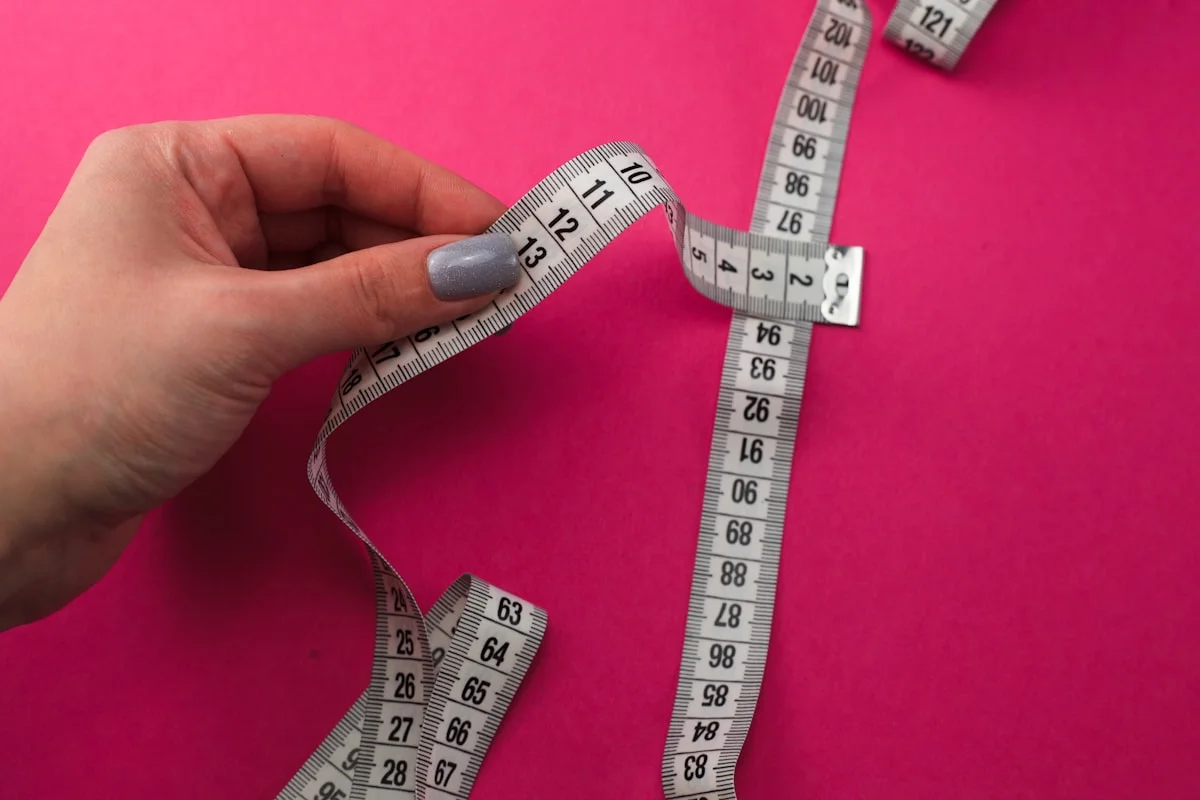
Understanding your measurements is the first step to dressing for your body shape.
How to Measure Your Waist Correctly
Getting accurate measurements at home is easier than you might think. Here is the method I use and recommend to friends who want to measure themselves properly.
First, grab a soft measuring tape. No need to spend money on anything fancy. A tailor's tape works perfectly.
Waist Measurement Guide
- 1
Find your natural waist. This is not your belly button. Your natural waist is the narrowest point of your torso, usually around the level of your navel or slightly above. Stand sideways to a mirror and notice where your body naturally curves in.
- 2
Keep the tape parallel. Wrap the measuring tape around your waist at that narrowest point. Keep it horizontal, meaning it should not dip in front or back. Hold it snug but not tight.
- 3
Measure your hips next. Find the widest part of your buttocks, typically around 7 to 9 inches below your natural waist. Wrap the tape around this area, keeping it parallel to the floor.
- 4
Measure your bust. Wrap the tape around the fullest part of your chest, usually across your nipples. Keep the tape parallel and do not pull it tight.
- 5
Calculate your ratio. Divide your waist by your hips. If the result is 0.70 or lower, and your bust and hips are close in measurement, you have an hourglass waist.
For a more detailed breakdown of hourglass measurements and how they compare to other body shapes, check out our hourglass body shape guide.
Celebrity Examples of Hourglass Waists
Looking at celebrities can sometimes feel discouraging, but I find it helpful to see how different figures achieve the hourglass silhouette. Here are a few well-documented examples.

Marilyn Monroe often cited her measurements as 36-26-34, though some sources suggest she was closer to 38-26-38. Either way, her WHR hovered right around that 0.70 mark. What made her iconic was not just the numbers but how she dressed to emphasize her curves.
Scarlett Johansson is frequently cited in body shape discussions. Her proportions reportedly fall in the 36-26-36 range, giving her a classic hourglass figure that reads well in both fitted and flowing silhouettes.
Sofia Vergara has one of the most recognizable hourglass figures in Hollywood. Her measurements reportedly showcase a pronounced curve with a smaller waist relative to both bust and hips.
Christina Hendricks became famous partly for her dramatic hourglass shape during her Mad Men years. She is open about rejecting pressure to change her figure and instead choosing clothing that complements her natural curves.
The takeaway from celebrity examples is not that you should look like them. It is that the hourglass shape manifests differently depending on your overall frame, height, and proportions. A petite hourglass and a tall hourglass can have the same ratio but look completely different.
Petite vs Tall: Hourglass Waist Variations
Two people can have identical waist-to-hip ratios and still look nothing alike. Height and overall frame make a massive difference in how your hourglass waist appears.
Petite hourglass (under 5 ft 4 in or 163 cm) tends to have more compact curves. The waist is still clearly defined, but the overall impression is more delicate. If you are a petite hourglass, you might notice that some clothing designed for your waist size ends up being too short in the torso or too wide in the shoulders. Petite sizing or high-waisted styles often work best because they balance your proportions vertically.
Tall hourglass (over 5 ft 7 in or 170 cm) typically has more space between the waist and hip curve. This creates a longer, more elongated hourglass silhouette. Tall hourglasses often have an easier time with standard sizing in terms of length, but may struggle to find tops and dresses that accommodate both a defined waist and a fuller bust or hip area.
Neither variation is better. They simply require different styling approaches. The key is understanding where your waist sits relative to your total height. If your waist appears higher on your frame, you likely have a shorter torso-to-leg ratio. If your waist appears lower, you have more vertical space to work with.
Styling to Enhance Your Hourglass Waist
Here is where the fun begins. Once you know you have an hourglass waist, you can dress to emphasize what makes your figure unique.
Do This
- Choose fitted styles that nip in at the waist
- Try high-waisted bottoms to draw attention to your waist
- Experiment with monochromatic looks
- Wear belts to reinforce waist definition
- Choose wrap dresses and fitted blazers
- Add structured shoulders to balance curves
Avoid This
- Oversized clothing that erases your waist definition
- Boxy, shapeless silhouettes
- Empire waistlines that bypass the natural waist
- Drop-waist styles
- Low-rise pants that ignore waist definition
- Stiff fabrics that add bulk rather than following curves
I know loose styles are trendy, but an oversized tee and baggy jeans can erase your waist entirely. If you prefer relaxed fits, add a belt or choose styles with structured shoulders and a defined waist. The hourglass waist is not something to downplay. It is a feature.
For more styling inspiration and body-positive guidance, see our female body types guide.
Common Questions About Hourglass Waists
What is a typical hourglass waist size?
Hourglass waist sizes commonly range from about 24 inches at size XS to 30 inches at size XL. The absolute number matters less than the ratio: your waist should measure 0.70 or less of your hips. For example, with 38-inch hips, a waist of 26.6 inches or smaller keeps you in the hourglass range.
Can you change your waist-to-hip ratio through exercise?
Targeted exercise can build muscle in your hips and glutes or slim your waist through fat loss, but your underlying bone structure sets the foundation. You can improve the appearance of your ratio through strength training and cardiovascular exercise, but your skeletal proportions stay the same.
Is the hourglass body shape rare?
Yes. Research suggests only about 8% of women have a true hourglass figure where bust and hips are nearly equal with a significantly smaller waist. This makes it one of the rarer body shapes, though plenty of women fall somewhere close to the hourglass category.
What is the ideal waist-to-hip ratio for an hourglass figure?
A WHR of 0.70 or lower is considered the hourglass standard. This means your waist is 70% or less of your hip measurement. Some people have an even more dramatic ratio below 0.65, which creates pronounced waist definition.
Do hourglass waists change with age?
Yes. Hormonal changes, muscle loss, fat redistribution, and changes in posture can all affect how your waist appears over time. Many women find their waist definition shifts during menopause or as activity levels change. This does not mean you lose your hourglass shape, but it may look different.
What is the difference between an hourglass waist and an hourglass figure?
An hourglass waist specifically refers to the narrowness of your waist relative to your bust and hips. An hourglass figure refers to your overall body shape, which includes the relationship between your shoulders, waist, and hips. You might have a defined waist but broader shoulders that shift your overall category.
Can petite women have hourglass figures?
Absolutely. Height does not determine body shape. Petite women can have a waist-to-hip ratio of 0.70 or lower, giving them a petite hourglass figure. The key is finding brands that offer both petite lengths and curvy or fitted cuts.
How does pregnancy affect the hourglass waist?
Pregnancy naturally changes your proportions as your body stores fat and your ribcage expands. Many women notice their waist-to-hip ratio increases during and after pregnancy. This is normal. Post-pregnancy, gradual strengthening can restore some definition, though your body may settle into a slightly different shape.
What clothing brands cater to hourglass figures?
Many brands offer curvy or hourglass-specific sizing. ASOS, Reformation, and Universal Standard have extended size ranges with curvy cuts. For higher-end options, Dolce & Gabbana and Carolina Herrera consistently design with the hourglass silhouette in mind.
Final Thoughts
Understanding your hourglass waist is less about chasing a particular ideal and more about understanding what makes your body unique. The measurements and ratios give you a framework, but they do not capture everything. How you carry your curves, how your muscles shape your silhouette, how confident you feel in your clothing all matter far more than whether your WHR is 0.69 or 0.71.
If you are curious about where your measurements land, I recommend starting with our body shape calculator. It takes two minutes and gives you a solid baseline for understanding your proportions.
From there, experiment with styles that celebrate your waist rather than play it down. The hourglass shape has been celebrated for centuries for good reason. It is a proportion that naturally creates beautiful lines and curves. Whether you are dressing for the office, a night out, or just running errands, your hourglass waist is an asset to work with, not a problem to solve.
For more information about how we develop our body shape content, visit our sources and methodology page.