Body Shape Calculator: Complete Guide to Measurements
Get accurate results from body shape calculators by learning exactly what measurements you need and how to take them correctly every time.
Quick Answer
A body shape calculator needs three measurements: bust (fullest part of your chest), waist (narrowest part of your torso), and hips (widest part, including your buttocks). Measure with a flexible tape kept parallel to the floor, wearing minimal clothing, and take each measurement two to three times for accuracy.
A body shape calculator uses your body measurements to determine your proportions and help you understand how clothing will fit your frame. The accuracy of any calculator depends entirely on the quality of measurements you provide.
This guide covers every measurement you need, where to place the tape, common mistakes to avoid, and how to interpret your results. These principles apply whether you use our free calculator or any other online tool.
Essential Measurements Explained
Understanding exactly where and how to measure is the key to accurate results.
Bust Measurement
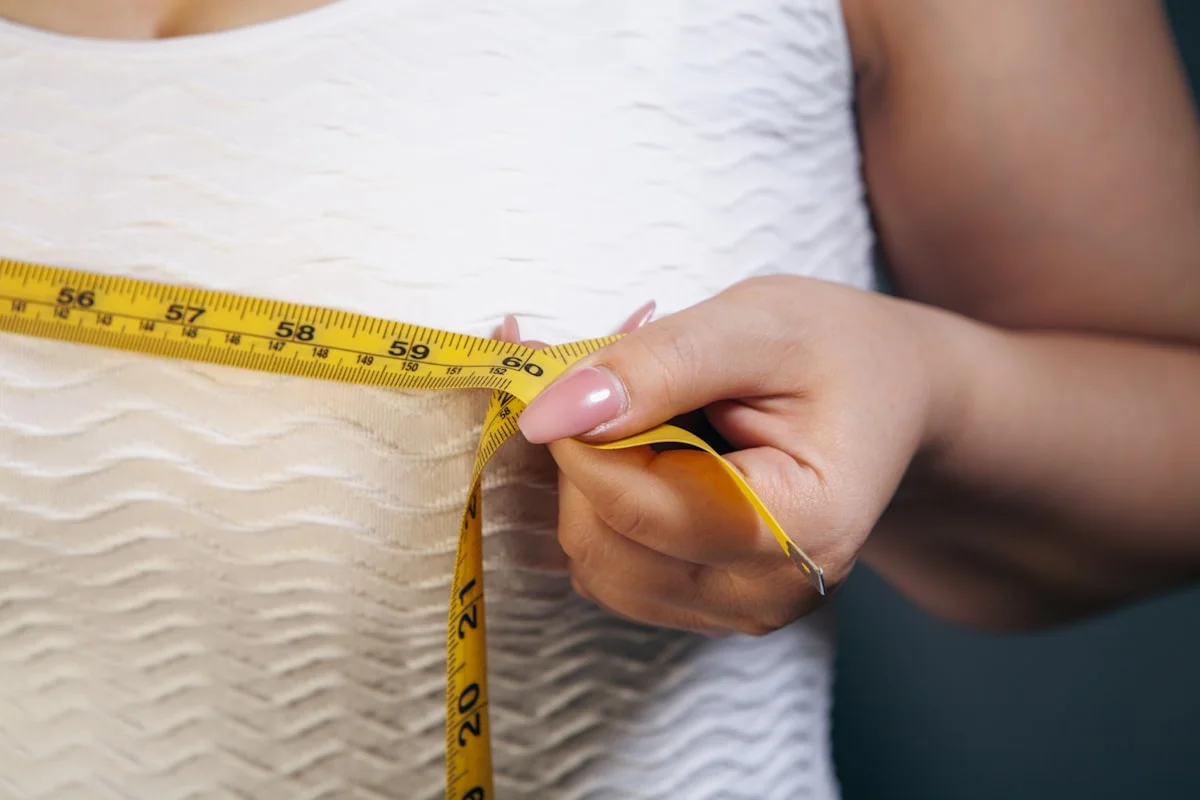
Wrap the tape around your back and across the fullest part of your bust. Keep the tape parallel to the floor. Do not compress the tissue.
- - Measuring too high (above bust)
- - Pulling tape too tight
- - Not keeping tape level
Waist Measurement
Find your natural waistline by bending to the side. This is where your torso creases, usually above your belly button. Measure without sucking in.
- - Measuring at belly button (too low)
- - Sucking in stomach
- - Measuring over clothing
Hip Measurement
Stand with feet together. Wrap the tape around the widest part, usually about 7 to 8 inches below your waist. Keep tape parallel to floor.
- - Measuring too high
- - Not including buttocks
- - Standing with feet apart
Shoulder Measurement (Optional)
Measure from the edge of one shoulder to the other, across your upper back. Have someone help for accuracy.
- - Measuring too low on arm
- - Including arm in measurement
- - Hunching shoulders
High Hip Measurement (Optional)
Measure around your body at the level of your hip bones, about 3 to 4 inches below your waist. This differs from your full hip measurement.
- - Confusing with full hip measurement
- - Measuring too high or low
Common Measurement Reference
These example measurements show typical ratios for each body shape. Your actual numbers may vary.
| Bust | Waist | Hips | Body Shape |
|---|---|---|---|
| 32" | 24" | 34" | Hourglass |
| 34" | 26" | 38" | Pear |
| 38" | 26" | 36" | Inverted Triangle |
| 34" | 28" | 36" | Rectangle |
| 36" | 30" | 40" | Apple |
Note: These are example measurements. Body shape is determined by ratios, not specific inch values.
Types of Body Shape Calculators
Different calculators use different measurements to determine your shape.
Basic 3-Measurement Calculator
Enhanced 4-Measurement Calculator
Comprehensive Calculator
Height/Weight Only
Tips for Accurate Results
Wear Minimal Clothing
Measure in underwear or thin, fitted clothing. Bulky fabrics add inches and throw off your results.
Keep the Tape Level
A tilted measuring tape gives inaccurate readings. Use a mirror or ask for help to ensure the tape is parallel to the floor.
Stand Naturally
Do not suck in, puff out, or contort your body. Stand relaxed with arms at your sides for accurate measurements.
Measure Multiple Times
Take each measurement 2 to 3 times and use the average. This accounts for minor variations in technique.
Use the Same Calculator
For tracking changes over time, use the same calculator consistently. Different calculators use different formulas.
Consider Your Frame Size
Body shape calculators measure proportions, not frame size. Two people with the same shape can have small or large frames.
How Body Shape Calculators Work
Body shape calculators work by comparing the ratios between your bust, waist, and hip measurements. These ratios reveal your proportion patterns, which corresponds to specific body shapes.
The Math Behind It
Body shape is determined by comparing proportions, not absolute numbers. Two women with completely different measurements could have the same body shape because their ratios are similar. For example, a woman with 34-26-36 measurements and another with 40-32-42 could both have an hourglass shape because their ratios are the same.
Key Ratios Calculated:
- - Waist-to-Hip Ratio: Waist divided by Hips
- - Bust-to-Hip Ratio: Bust divided by Hips
- - Waist Definition: (Bust plus Hips) divided by 2, minus Waist
Understanding Your Ratios
The waist-to-hip ratio is particularly important. A ratio below 0.80 typically indicates an hourglass shape. A ratio between 0.80 and 0.85 often suggests a pear shape. Ratios above 0.95 may indicate an apple shape. These ranges vary by calculator, but this gives you a general idea.
Why Our Calculator
Our calculator uses your bust, waist, and hip measurements to calculate ratios between these points. These ratios are then compared against standard body shape criteria to determine your type. We keep the process simple while still providing accurate results.
Privacy First
Our calculator processes everything in your browser. Your measurements are never sent to our servers, stored, or shared. Once you close the page, the data is gone completely. Your privacy is protected.
Frequently Asked Questions
What measurements do I need for a body shape calculator?
You need three key circumference measurements: bust (fullest part of your chest), waist (narrowest part of your torso), and hips (widest part including your buttocks). These three measurements create the ratios that determine your body shape. Some advanced calculators also use shoulder width and high hip measurements for extra precision.
How do I measure my bust accurately?
Stand wearing a thin bra or no clothing. Wrap a flexible measuring tape around your back and across the fullest part of your bust. Keep the tape parallel to the floor without pressing into the tissue. The tape should rest flat against your skin without sinking in or gapping. This measurement is taken at chest height, not under your arms.
Where exactly should I measure my waist?
Your waist measurement should be taken at the narrowest part of your torso, not at your belly button. To find this spot, bend to one side and notice where your torso creases. This natural waistline is typically about 2 inches above your belly button. Breathe normally while measuring and avoid sucking in your stomach.
How do I measure my hips for a body shape calculator?
Stand with your feet together. Wrap the measuring tape around the widest part of your hips and buttocks. This is usually about 7 to 8 inches below your natural waistline. Keep the tape parallel to the floor and ensure it sits flat against your skin. Do not pull it tight or let it gap.
Can height and weight tell me my body shape?
No. Height and weight are body size measurements, not proportion measurements. Two women with identical height and weight can have completely different body shapes because these numbers do not show where weight distributes on your frame. Circumference measurements at your bust, waist, and hips are essential for determining body shape.
Should I use a calculator that includes shoulder measurements?
If you have noticeably broad or narrow shoulders compared to your hips, a calculator with shoulder measurements provides better accuracy. This is especially true for identifying inverted triangle shapes, where shoulders are significantly wider than hips. However, a basic three-measurement calculator works well for most women.
Why do different calculators give me different results?
Each body shape calculator uses its own ratio thresholds and algorithms. Some use stricter definitions for specific shapes. If your measurements fall near boundary lines between categories, you may receive different results across calculators. Use the result that feels most accurate for your frame, or try multiple calculators.
How often should I recalculate my body shape?
Recalculate after significant weight changes of 10 pounds or more, after pregnancy, after major fitness changes that alter your muscle distribution, or every 6 to 12 months as a general check. Your body shape can shift over time, and updating ensures your styling choices remain complementary.
Can body shape change as I get older?
Yes, body shape often shifts with age due to hormonal changes, muscle tone changes, and shifts in weight distribution. Many women transition from hourglass or pear shapes to more rectangular silhouettes over time. Regular recalculation helps you choose clothing that complements your current proportions.
What if my measurements fall between two body shapes?
This is common. Many women have proportions that blend two body shapes. In these cases, choose styling recommendations from both shapes that feel comfortable. Focus on what complements your specific frame rather than strictly adhering to one category.
Body shape classification based on measurement ratios. Styling recommendations are general guidance.Learn about our methodology
Get Weekly Style Tips
Join thousands of women discovering their perfect style. Get exclusive fashion tips, trend alerts, and style guides delivered to your inbox.
Free weekly updates. Unsubscribe anytime.